Tag: reference

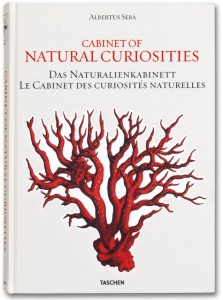
  • Albertus Seba – Cabinet of Natural Curiosities (Tashchen)

    cover_ju_25_seba_curiosities_1107131700_id_250489

    It is probably the height of aspirational middle class parenting to buy your five year old a Taschen hardcover tome but hear me out.

    Albertus Seba was an pharmacist and collector of specimens from around the globe in the early 1700s. Based in Amsterdam he amassed such an incredible collection both in breadth and depth, reknowned throughout Europe, that he commissioned artists of the time to draw illustrations of his specimens. This lead to the publication of a four volume ‘thesuarus’ of the natural world between 1734 and 1765 delayed by his death in 1735.

    Art publisher Taschen has produced this fantastic set as a single book based on a hand-coloured original with about 400 plates. The detail and diversity is amazing and my son was immediately captivated by its intricacy and strange accumulation of snakes, frogs, lizards, plants, squid, shells, insects, spiders, and butterflies.

    Excited flicking through the pages, “what is that?”, “is that really a . . ?”, “is that real?”.

    Unlike modern ‘references’ books of the natural world – littered with saturated photography and didactic text – there is an immediate sense of ‘wonder’ that pops out from Seba’s arrangements and the intricately detailed hand drawn illustrations. Much like the ‘specimen drawers’ in natural history museums that are making a comeback, there is a certain type of inspiration that comes from seeing ‘everything at once’.

    It is a lovely book and one that more children should be allowed to get their hands on.
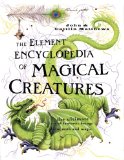
  • The Element Encyclopaedia of Magical Creatures by John & Caitlin Matthews (Sterling)

    When I was growing up I used to dip in and out of Funk & Wagnall’s Dictionary of Folklore, Myth and Legends. A hefty tome bereft of images, it used to sit on the shelf beside the other dictionaries and encyclopaedias. And I always thought Funk was a cool surname, even when one of my high school science teachers was also called Mr Funk.

    I popped into Strand Books today with the children in tow, giving them an opportunity to spend their pocket money on something other than sweets laced with high fructose corn syrup. And there sitting amongst a frightfully small ‘mythology’ section, was this – The Element Encyclopaedia of Magical Creatures.

    I am bit surprised that there aren’t more of these sorts of books around – especially in the wake of Harry Potter and the recent wave of teenage pulp undead fiction. Of course, there’s a lot of single species books designed to look like ‘faux-olde-worlde’ tomes with puffy covers (the -Ology series) or cheaply produced paperbacks full of badly Photoshopped stills from recent movies. But there’s certainly not the wealth of well-illustrated hardcovers that I had as a kid.

    Anyway, back to The Element Encyclopaedia of Magical Creatures.

    Pitched at upper-primary readers and beyond, I was pretty impressed by the diversity of creatures contained within, and their histories. There’s plenty of global beasts drawn from lesser known mythos, as well as the obvious choices. Some woodcuts keep the illustrations appropriately restrained, no 12 year old’s fantasy fiction drawings in this one fortunately. On the downside, it would have been good to have had a bibliography with at least a few of the entries for further mythological investigations.

    Nevertheless it is a good go-to-book anytime you get asked “Dad, why is the basilisk in Harry Potter different to the basilisks in other stories?”.