Tag: monsters

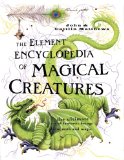
  • The Element Encyclopaedia of Magical Creatures by John & Caitlin Matthews (Sterling)

    When I was growing up I used to dip in and out of Funk & Wagnall’s Dictionary of Folklore, Myth and Legends. A hefty tome bereft of images, it used to sit on the shelf beside the other dictionaries and encyclopaedias. And I always thought Funk was a cool surname, even when one of my high school science teachers was also called Mr Funk.

    I popped into Strand Books today with the children in tow, giving them an opportunity to spend their pocket money on something other than sweets laced with high fructose corn syrup. And there sitting amongst a frightfully small ‘mythology’ section, was this – The Element Encyclopaedia of Magical Creatures.

    I am bit surprised that there aren’t more of these sorts of books around – especially in the wake of Harry Potter and the recent wave of teenage pulp undead fiction. Of course, there’s a lot of single species books designed to look like ‘faux-olde-worlde’ tomes with puffy covers (the -Ology series) or cheaply produced paperbacks full of badly Photoshopped stills from recent movies. But there’s certainly not the wealth of well-illustrated hardcovers that I had as a kid.

    Anyway, back to The Element Encyclopaedia of Magical Creatures.

    Pitched at upper-primary readers and beyond, I was pretty impressed by the diversity of creatures contained within, and their histories. There’s plenty of global beasts drawn from lesser known mythos, as well as the obvious choices. Some woodcuts keep the illustrations appropriately restrained, no 12 year old’s fantasy fiction drawings in this one fortunately. On the downside, it would have been good to have had a bibliography with at least a few of the entries for further mythological investigations.

    Nevertheless it is a good go-to-book anytime you get asked “Dad, why is the basilisk in Harry Potter different to the basilisks in other stories?”.
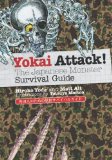
  • Yokai Attack! The Japanese Monster Survival Guide by Hiroko Yoda & Matt Alt (Kodansha)

    Last time I wrote I was heading off to Japan for the school holidays. We survived that trip with the help of this handy and fun little guide. We even managed to spot some of the monsters contained within along the way!

    Yokai Attack! is the kind of book that as a 9 or 10 year old I would have pored over for months.

    Short, written in a ‘vital statistics’ style, and for those who just want to dip in and out from time to time, it details roughly 40 strange Japanese monsters, or more accurately, ‘spirits’. Some of these are from traditional folklore like Onibaba, the mad old woman who ate her daughter and grandchild, and the Kappa, the cucumber-obsessed flatulent amphibian that drags unsuspecting people under in Japan’s waterways (and after whom cucumber sushi rolls – kappa-make are named!). While others are better known from Manga and Japanese horror films.

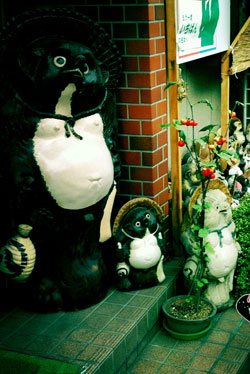
    If you’ve watched Miyazaki’s wonderful animations Spirited Away, My Neighbour Totoro or Pom Poko, then you will know a fair number of these creatures already – which is why this book is equally fun reading for young and old. Spirited Away features, amongst other spirits, a Nopperabo (“no face”) who visits the bathhouse and Pom Poko is all about the antics of the Tanuki, the magical Japanese racoon dogs with unfeasibly large testicles (!) who play shapeshifting tricks on humans and like to party and drink themselves into a stupor. My children had great fun pointing out the Tanuki statues we saw outside of noodle bars in Kyoto, Osaka and Tokyo!

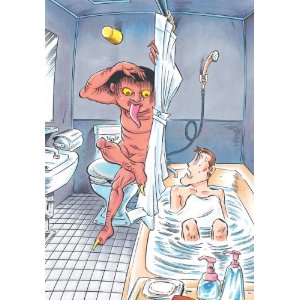
    The book is illustrated by Tatsuya Morino with amusing cartoons of each monster. Here’s the bath dwelling Akaname. This one uses its tongue to attack and clean all those who bathe in dirty bathrooms . . . .

    For younger children these monster stories need adult supervision. Quite a number are creepy in a Japanese horror movie kind of way. But if you are planning a visit to Japan with children then I’d highly recommend it as it provides many new ways to view the many odd things your children will encounter and ask about (even if your only questions relate to the omnipresent Tanuki statues).

    Similarly if your children are fans of Miyazaki’s films the book offers an additional layer of interpretation, pitched just right for their attention span and curiosity.